Gold Coast Property Market Update: Spring 2026.
Gold Coast values have eased from their peak, buyers have more choice and interest rates are the highest in fifteen years. Our Gold Coast property market update 2026 looks at what the latest data shows, and what it means if you’re thinking about selling this spring.
By Cameron Cullen, Director - Gold Coast
Published on October 22, 2026.
Last updated on October 22, 2026.
After several years of strong growth, the Gold Coast property market has changed pace. Values eased through winter and into spring, buyers have more choice, and interest rates are sitting at levels many homeowners haven’t seen in fifteen years.
That doesn’t mean the opportunity has gone. It means the market is now rewarding a different approach.
If you’re thinking about selling on the Gold Coast this spring, here’s what the latest data shows and what it means for your plans.
What’s happening to Gold Coast house prices?
Gold Coast dwelling values eased 0.8% over the three months to July 2026, according to Cotality’s Regional Market Update. Cotality’s Head of Research, Gerard Burg, described it as a more selective market starting to emerge across regional Queensland.
The latest figures for regional Queensland as a whole show that softening has continued. According to the Cotality Home Value Index (results to 30 September 2026), regional Queensland dwelling values:
- Fell 0.9% in September and 2.5% over the quarter
- Are still up 6.3% over the year, with a median value of $834,425
- Sit 2.8% below their May 2026 peak
Houses eased slightly more than units over the quarter (down 2.8% compared with 1.7%), but both remain well ahead of where they were twelve months ago.
So values have come back a little from their high point. Most Gold Coast homeowners are still sitting on solid gains.
Why are Gold Coast property prices easing?
Interest rates are the biggest factor. Cotality notes the RBA has lifted the cash rate to its highest level in fifteen years, which affects how much buyers can borrow and how confident they feel about stretching.
Buyers are also taking their time. Across the combined capitals, homes took a median of 39 days to sell, up from 23 days a year earlier, and total listings were up 23.1% on last year (Cotality Home Value Index).
More choice and more time is a shift buyers on the Gold Coast are feeling too. They’re comparing more homes, asking more questions, and walking away from anything that feels overpriced.
Is the Gold Coast holding up better than the capital cities?
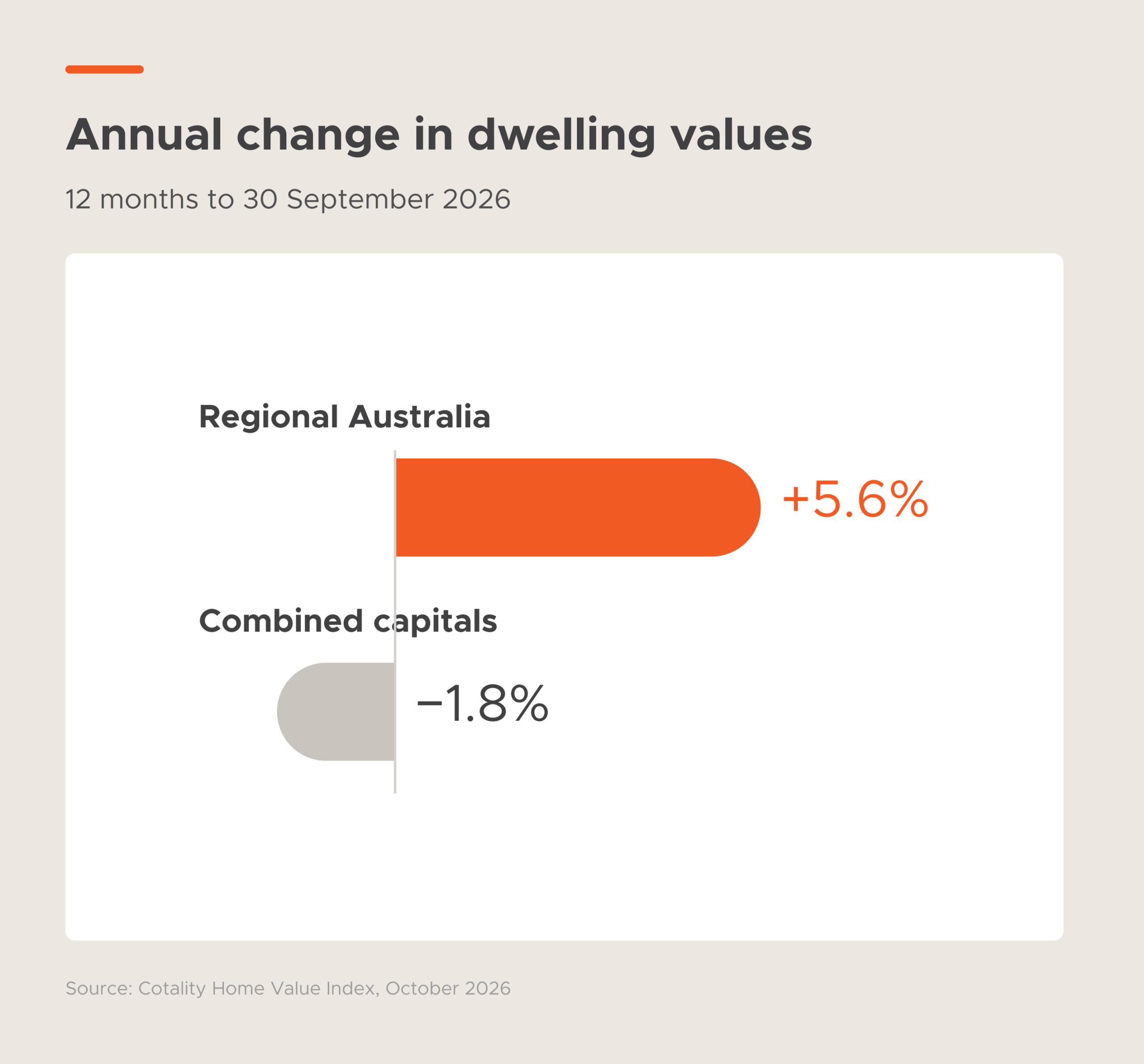
Yes, so far. Regional dwelling values across Australia are up 5.6% over the year, compared with a 1.8% annual decline across the combined capitals (Cotality Home Value Index).
Cotality points to a relatively tight labour market and persistently low new housing supply as factors that should help limit how far values fall. Both are familiar stories on the Gold Coast, where lifestyle appeal continues to draw families, downsizers and people relocating from interstate.
What does this mean if you’re selling a house on the Gold Coast?
A slower market isn’t a bad market to sell in. It’s a market where preparation counts for more.
- Price for today, not last year. Buyers have more listings to compare against. A realistic starting point keeps your home in the conversation from week one.
- Presentation matters more. When buyers have choice, the well-presented homes are the ones they come back to.
- Plan for a slightly longer campaign. Knowing that upfront takes the pressure off and helps you make calmer decisions along the way.
- Think about your next move. If you’re buying again on the Gold Coast, you’ll be buying in the same conditions you’re selling in. That can work in your favour.
- Get a local view. Suburb by suburb, and street by street, conditions vary. Broad regional figures only tell part of the story.
Key themes shaping the Gold Coast market this spring.
- Growth has paused, not reversed. Regional Queensland values are still up 6.3% over the year.
- Interest rates are front of mind. Higher borrowing costs are shaping how much buyers spend and how quickly they act.
- Buyers have more time and choice. Selling times have lengthened and stock levels have lifted.
- Regional markets are more resilient. Low supply and steady demand continue to support coastal lifestyle areas like the Gold Coast.
Thinking about selling this spring?
The Gold Coast market hasn’t lost its appeal. It’s just asking sellers to be more thoughtful about price, presentation and timing. If you’d like a clear picture of what your home is worth right now, Cameron and the Image Property Gold Coast team are happy to talk it through. No pressure, just honest local advice. We’ll see you home.
This article is for general information only and does not constitute financial or investment advice.