Image Property ,
at Image Property.
What’s driving Australia’s property market in 2026
Prospects for residential real estate 2026:
By Terry Ryder, founder, hotspotting.com.au
Australia looks set for a year of widespread price growth, right across the nation.
The standout feature of our analysis of residential property markets is the universal strength nationwide.
This is unusual because real estate is essentially local in nature and normally I regard Australia as a four-speed market:
- Locations with boom-level growth,
- Locations with moderate growth,
- Places where prices are flatlining, and
- Locations where prices are falling.
We saw those multiple scenarios among the capital cities in 2024 – but we reached the end of 2025 with solid growth in all cities and all state regional markets. The worst performer had a 5% rise in house prices last year – and all the unit markets showed some level of growth, except for Canberra.
This means that 2026 begins with considerable momentum in terms of buyer demand, against a backdrop of limited supply.
The Australian housing industry has a shortage of everything that matters, including:
- Homes listed for sale
- Rental properties
- New dwellings
Federal politicians like to spruik their target of 1.2 million new homes in five years but there is no prospect of that lofty target being reached (as Federal Treasury admitted recently), because our elected representatives have done nothing beyond the press conferences to facilitate the delivery of an unprecedented level of new homes.
Meanwhile, buyer demand remains high, boosted by:
- State and federal government assistance to first-home buyers (who have the additional motivation of trying to escape rapidly rising rents),
- High population growth (thanks to the influx of overseas migrants and the high level of internal migration), and
- Over $2,000 billion in infrastructure projects nationwide, which generate widespread economic activity and employment, which translates into demand for dwellings.
The situation, is simple terms, is high demand and very low supply. The inescapable conclusion is that prices will rise further in 2026.
Hotspotting has just completed a detailed analysis of the 14 major market jurisdictions in Australia (eight capita cities and six state regional markets). We use six different forward-looking metrics to rank the 14 jurisdictions on their prospects for price growth in the year ahead.
Our conclusion is that all 14 have demand drivers which will put upward pressure on dwelling values in 2026. Even the lowest ranked markets will deliver price growth this year.
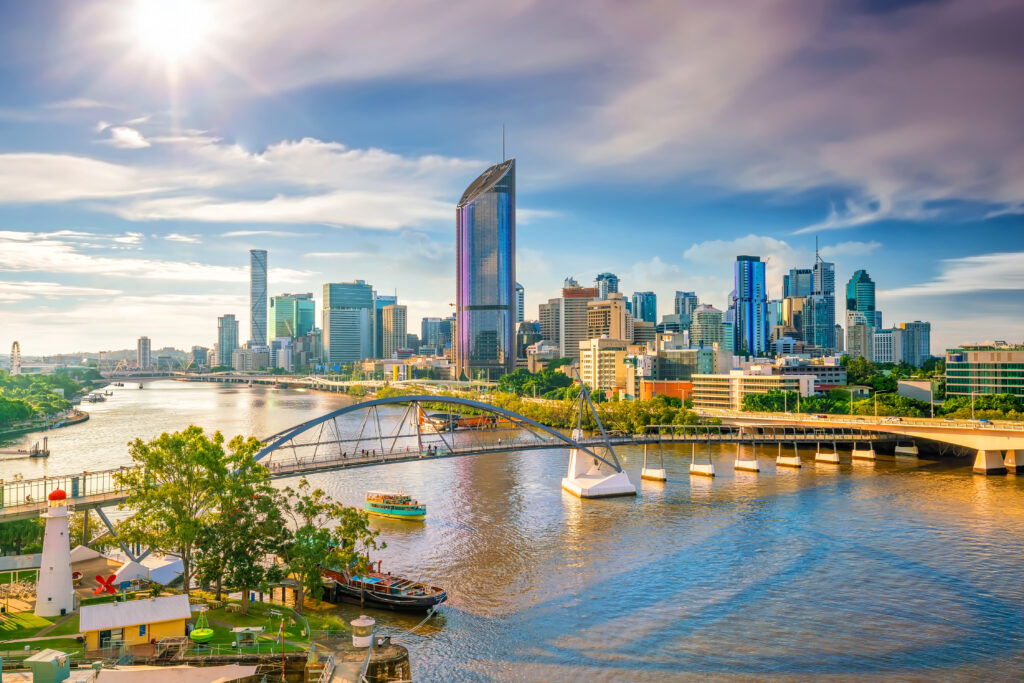
The No.1 ranked market in the nation is Brisbane. It scores well on all six metrics. Sales activity is rising, properties are generally selling quickly, many are selling above asking prices, vacancies are low, rents continue to rise and the infrastructure spend is notably high.
There will be more impact from infrastructure investment as work begins in preparation for the 2032 Olympics.
There is strength in the different markets across Greater Brisbane, including inner-city apartment markets, middle-ring precincts north the CBD and outer ring municipalities like Moreton Bay in the north, Logan in the south and Ipswich in the south-west.
Regional Queensland sits mid-table in our overall rankings, with some of the former boom locations past the peak of their cycles (notably some of the Central Queensland regional centres), but key locations including the Gold Coast, the Sunshine Coast and Toowoomba continue to deliver strong numbers in multiple metrics.
The Gold Coast has had five years of price growth and shows no sign of slowing down. In contrast to the region’s history of boom-bust scenarios because of periods of high-rise oversupply, the Gold Coast currently has the opposite problem – a serious shortage, with high construction costs preventing many major projects from proceeding.
The Sunshine Coast, a national leader on price growth from 2020 to 2023, is now moving into another growth cycle. The high level of infrastructure investment which inspired that previous boom remains a factor, including the new Maroochydore CBD project which remains a long-term work in progress.
The Sunshine Coast now has an international airport, a work-class medical precinct and an expanding university campus – and continues to be Australia’s No.1 destination for internal migrants.
Both the Gold Coast and the Sunshine Coast will host multiple events in the 2032 Olympics and, like Brisbane, will receive considerable impetus from investment in the infrastructure (sporting, hospitality and transport projects) needed to make that happen.