Rebecca Carson,
Director - Melbourne at Image Property.
Investment Property Frankston – Why Investors Are Taking a Closer Look
Melbourne’s property market is beginning to show early signs of renewed activity, and attention is starting to shift toward suburbs offering both accessibility and long-term potential. Frankston is one of those locations.
Located around 40 kilometres south-east of the Melbourne CBD, the suburb has seen steady transformation over the past decade. Infrastructure investment, improved amenities, and continued population growth are all contributing to increased interest.
A Market Gaining Attention
As Melbourne moves through the next stage of its property cycle, investors are beginning to look more closely at suburbs where opportunity and accessibility meet.
Frankston offers:
- More accessible entry points compared to inner Melbourne
- Growing demand across both buyers and renters
- Improving infrastructure and connectivity
This combination continues to draw attention from those looking at longer-term opportunities.
Growth Over Time
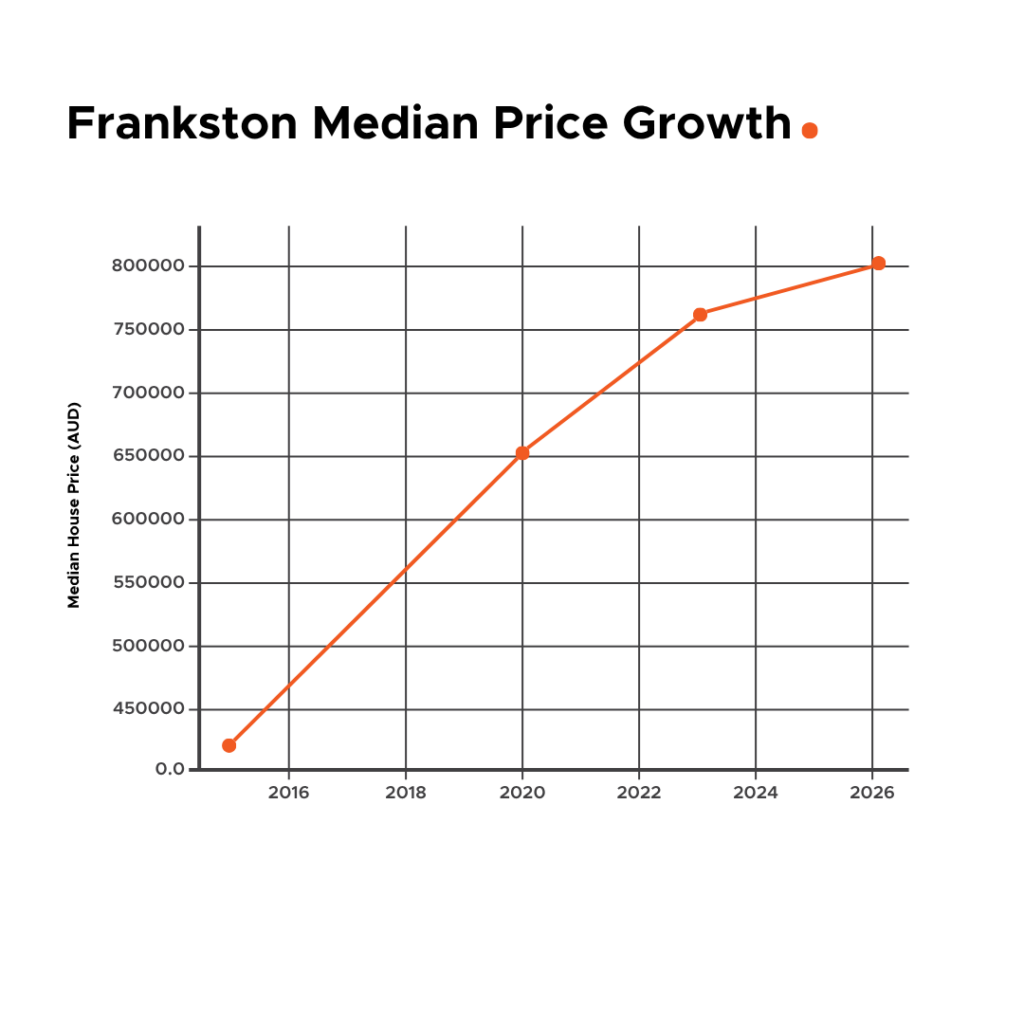
Over the past decade, Frankston has experienced strong price growth. Median house prices have increased from approximately $422,500 in 2015 to around $800,000 today, reflecting a shift in how the suburb is being recognised.
According to PropTrack (REA Group) data, median house prices in Frankston City have grown at an average of 5.9% per annum over the five years to June 2025 — outpacing Greater Melbourne’s 3.1% per annum over the same period.
Surrounding areas are also showing strong performance, reinforcing the broader strength of the region. For a closer look at how different areas are performing, you can explore current property market trends.
Infrastructure Supporting the Area
A key driver behind Frankston’s growth is infrastructure investment. The $1.1 billion redevelopment of Frankston Hospital is a significant project, expanding healthcare services while also creating employment opportunities across the region.
According to the Victorian Health Building Authority, the redevelopment — now known as Peninsula University Hospital — is the largest ever health infrastructure investment in Melbourne’s south-east, adding 130 beds, 15 new operating theatres, and expanded services across mental health, oncology, and women’s and children’s health.
Large-scale projects like this often contribute to sustained housing demand in surrounding areas.
Ongoing Development and Renewal
Alongside public investment, Frankston is seeing continued private development.
New projects across the city centre are introducing:
- Additional housing options
- Retail and hospitality spaces
- Improved lifestyle amenity
These changes are gradually reshaping the suburb and supporting its long-term appeal.
Rental Demand Remains Strong
Rental demand across Melbourne remains tight, and Frankston is benefiting from this.
Demand is supported by:
- Local workforce growth
- Healthcare expansion
- Movement of residents into more accessible suburbs
For investors, this creates a steady foundation from both a rental and long-term perspective.
A Growing Population
Frankston’s population growth underpins much of this demand. According to the Australian Bureau of Statistics (ABS), Frankston City’s population reached approximately 142,826 in June 2023, growing steadily year-on-year. Population forecasts prepared on behalf of Frankston City Council project the municipality will grow to over 161,000 residents by 2041 — an increase of nearly 21,000 people from the 2021 base.
Looking Ahead
Frankston has moved from being an overlooked suburb to one that is increasingly part of the conversation. With infrastructure investment, ongoing development, and accessible entry points, it presents a combination of factors that continue to attract attention.
As Melbourne’s market evolves, suburbs like Frankston are likely to remain on the radar for those exploring future opportunities.
If you’re considering how this may align with your own plans, speaking with our team can help provide a clearer understanding of what may be possible.